Department of Sanskrit
One of the most important and significant department of Nabadwip Vidyasagar College is its Sanskrit Department as Nabadwip has been carrying the glory of being the centre of practice for Sanskrit for ages .Both the UG & PG(Regular) courses are taught here. Six professors adorn the UG faculty of whom four are assistant professors and two are SACT .Every year near about 500 students populate the 1 st ,2 nd and 3 rd year course. The Sanskrit department has its own individual library with a vast collection of books. The student get enriched by taking books from this library. They are motivated to acquir the knowledge of Sanskrit and its application. They are exposed to numerous seminars on Sanskrit . They published a good quality wall magazine in every year. In case of teaching apart from lecture methods, audio- visual mode is used to render the learning process much more attractive Educational tour are organized with the student in every year. This kind of curriculum helps a lot to strengthen the bonding of the students with the teacher. Once the students having been admitted to this college in UG course, can complete their PG(Regular) under the same roof. The departmental professors here also impart coaching on NET & SET to the students.
Courses Offered :
- B.A. Sanskrit Honours
- B.A. Sanskrit General/ Programme
- M.A Sanskrit
Syllabus :
Faculty Members :

Dr. Soma Mandal
Assistant Professor
Sri Biplab Bagdi
Assistant Professor
Sri Nitai Pal
Assistant Professor
Dr. Joydev Bhattacharyya
SACT- II
Smt. Swati Bhattacharyya
SACT- II
Smt. Nandita Das
Assistant ProfessorFacilities
Sanskrit is a very rich language of IE language group. Sanskrit is a medium to know about ancient Indian history, culture, religion, social life through its text. The academic programme of both Honours and General degree courses are designed not only professional skill but also develop a deep understanding of rich heritage and dynamic prevalent scenario of India through various Sanskrit texts.
PO1. Develop a strong concept of ancient Indian history, philosophy and literature.
PO2. Enhance communication skills-Listening, Speaking, Reading, Writing.
PO3. Students will be able to write Devnagari scripts which provide them paleographical knowledge to read out the script of modern languages like Hindi and Marathi.
PO4. Increase in depth knowledge of the Core Areas of the subject.
PO5. Students will demonstrate the skill needed to participate in conversation that builds knowledge with collaboration.
PO6. Reasonable understanding of multi-disciplinary relevance of literature of Sanskrit like Veda, Philisophy, Grammar, Kavya, Smitisastra etc.
PO7. To make them eligible for higher education.
PO8. Develop research aptitude and independent thinking.
PO9. After becoming graduate students can apply in the field of UPSE, WBCS etc. And also after postgraduation they can apply against teaching posts in schools, colleges and other educational institutions.
Notice
| Sl. No. | Date | Title | View/Dwnload |
|---|---|---|---|
| 1 | 11 Jun 2021 | Semester-I Exam Notice | Download |
Routine
| Sl. No. | Date | Title | View/Dwnload |
|---|---|---|---|
| 1 | 17 Feb 2023 | Routine 2021-22 | Download |
Seminars
Academic Excellence
| Year | Appeared | Success Rate(%) | 1st Class | Highest Marks(%) |
|---|---|---|---|---|
| 2022 | 81 | 98.76 | 80 | Barsa Mallik |
| 2021 | 79 | 89.87 | 71 | Lina Chatterjee |
| 2020 | -- | -- | -- | Mandira Chanda |
Questions
University Questions
- 2019-2020 Question Paper
- 2020-2021 Question Paper
- 2021-2022 Question Paper
- 2022-2023 Question Paper
- 2023-2024 Question Paper
- 2024-2025 Question Paper
Internal Questions
| Sl.No. | Date | Title | Download |
|---|---|---|---|
| 1 | 16 Feb 2023 | Internal Questions | Download |
Wall Magazine
Excursion / Study tour
Gallery
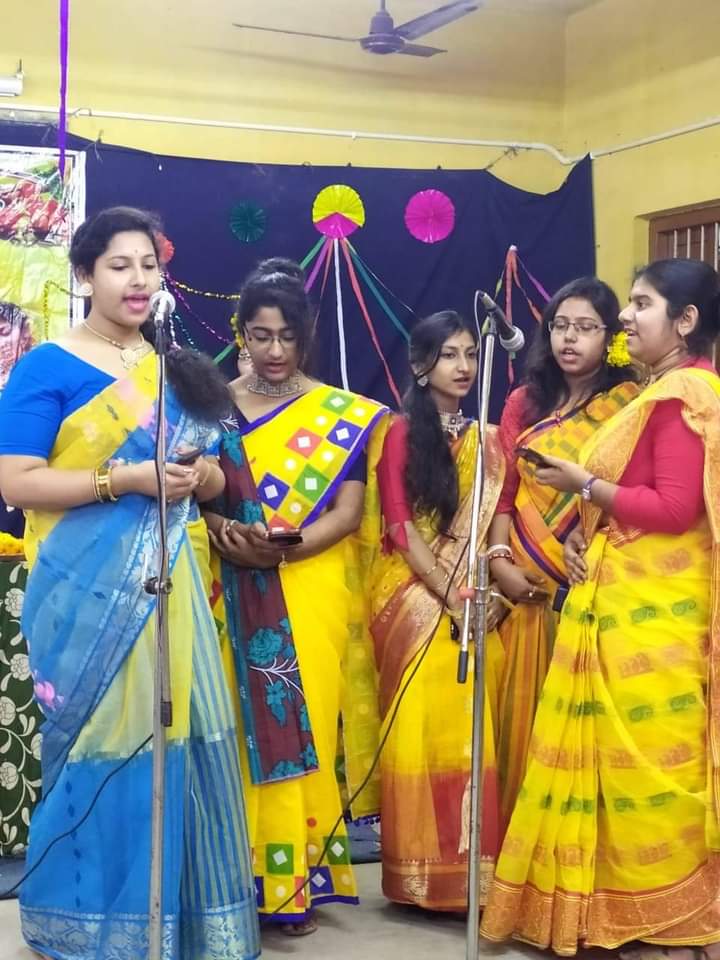
Bosonto Utsab
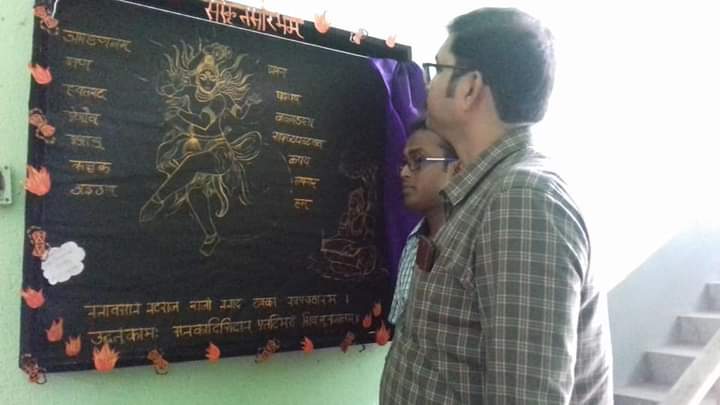
Wall Magazine